If you’ve ever wondered whether blogging is still worth the effort, you’re not alone. With AI-generated content, social media, and constantly changing Google algorithms, many business owners ask the same question:
Does Blogging Help SEO?
The short answer is yes.
When done strategically, blogging remains one of the most effective ways to improve your search visibility, attract qualified visitors, and build trust with potential customers. But the key phrase is when done strategically.
Publishing random blog posts just to keep your website active won’t move the needle. Today’s SEO is about creating helpful, well-organized content that answers the questions your audience is already searching for.
In this guide, we’ll answer Does Blogging Help SEO?, explain why blogging still matters, and show you how to create content that supports long-term business growth.

Does Blogging Help SEO?
Yes, blogging helps SEO because it gives search engines more opportunities to understand your website, rank your content, and connect you with people searching for information related to your business.
Every blog post becomes another page Google can crawl and index. It also gives you the opportunity to target new keywords, answer customer questions, and demonstrate your expertise.
However, blogging isn’t simply about publishing more content.
It’s about publishing the right content.
A handful of thoughtful, helpful articles will almost always outperform dozens of posts that provide little value.
Why Google Loves Helpful Content
Google’s goal has always been the same: provide the best answer to every search.
When someone searches for:
- How do I improve my website’s SEO?
- What is keyword research?
- How long does SEO take?
Google wants to recommend pages that provide clear, accurate, and trustworthy answers.
That’s exactly what a strong blog can do.
Instead of focusing on selling your services, blogging allows you to educate your audience first.
The more helpful your content is, the more likely people are to:
- Stay on your website
- Explore additional pages
- Share your content
- Return in the future
Those are all positive signals that support your overall SEO strategy.
Blogging Helps You Rank for More Keywords
One of the biggest benefits of blogging is that it expands the number of searches your website can appear for.
Imagine you only have a homepage and a services page.
Google only has a few opportunities to understand what your business offers.
Now imagine adding blog posts about:
- Keyword research
- Google Search Console
- Search intent
- SEO audits
- AI search
- Blogging
Suddenly, your website covers many more topics and answers many more questions.
That’s one of the biggest reasons Does Blogging Help SEO? continues to be such an important question for business owners.
Each helpful article creates another opportunity to be discovered.
Blogging Builds Topical Authority
Google doesn’t just evaluate individual pages.
It also looks at how much expertise your website demonstrates around a particular topic.
This is called topical authority.
For example, my website focuses on topics like:
- SEO strategy
- Keyword research
- Website audits
- Google Search Console
- AI search
- Search intent
- Content optimization
Together, these articles show Google that my website consistently covers SEO in depth.
Over time, this strengthens my authority within that topic.
Blogging Answers Customer Questions
Think about the conversations you have with customers.
What do they ask before deciding to work with you?
Maybe they ask:
- How long does SEO take?
- What is an SEO audit?
- Why isn’t my website ranking?
- Is SEO worth it?
Those questions are excellent blog topics.
Instead of answering them one customer at a time, your blog allows you to answer them for hundreds—or even thousands—of future visitors.
That’s one of the biggest reasons Does Blogging Help SEO? remains an easy “yes.”
You’re creating resources that continue working long after you publish them.
Blogging Supports Internal Linking
Every new article creates another opportunity to connect related content.
For example, this article naturally links to topics like:
- What Is Search Intent?
- Best Free Keyword Research Tools
- How Long Does SEO Take?
- Google Search Console
- SEO Roadmaps
Internal links help visitors discover more of your content while helping Google understand how your pages relate to one another.
A well-connected website is easier to navigate for both people and search engines.
Blogging Creates Long-Term Traffic
One of my favorite things about blogging is that the work continues paying off over time.
A social media post might be seen for a day or two.
A blog post can continue attracting visitors for months—or even years.
I’ve seen articles continue generating traffic long after they were published because they answered questions people continue searching for.
That’s one of the biggest advantages of SEO.
The effort compounds over time.
Not Sure What to Write About?
One of the biggest challenges I hear from business owners isn’t writing the blog.
It’s figuring out what to write about.
You don’t need dozens of random ideas.
You need topics your audience is already searching for.
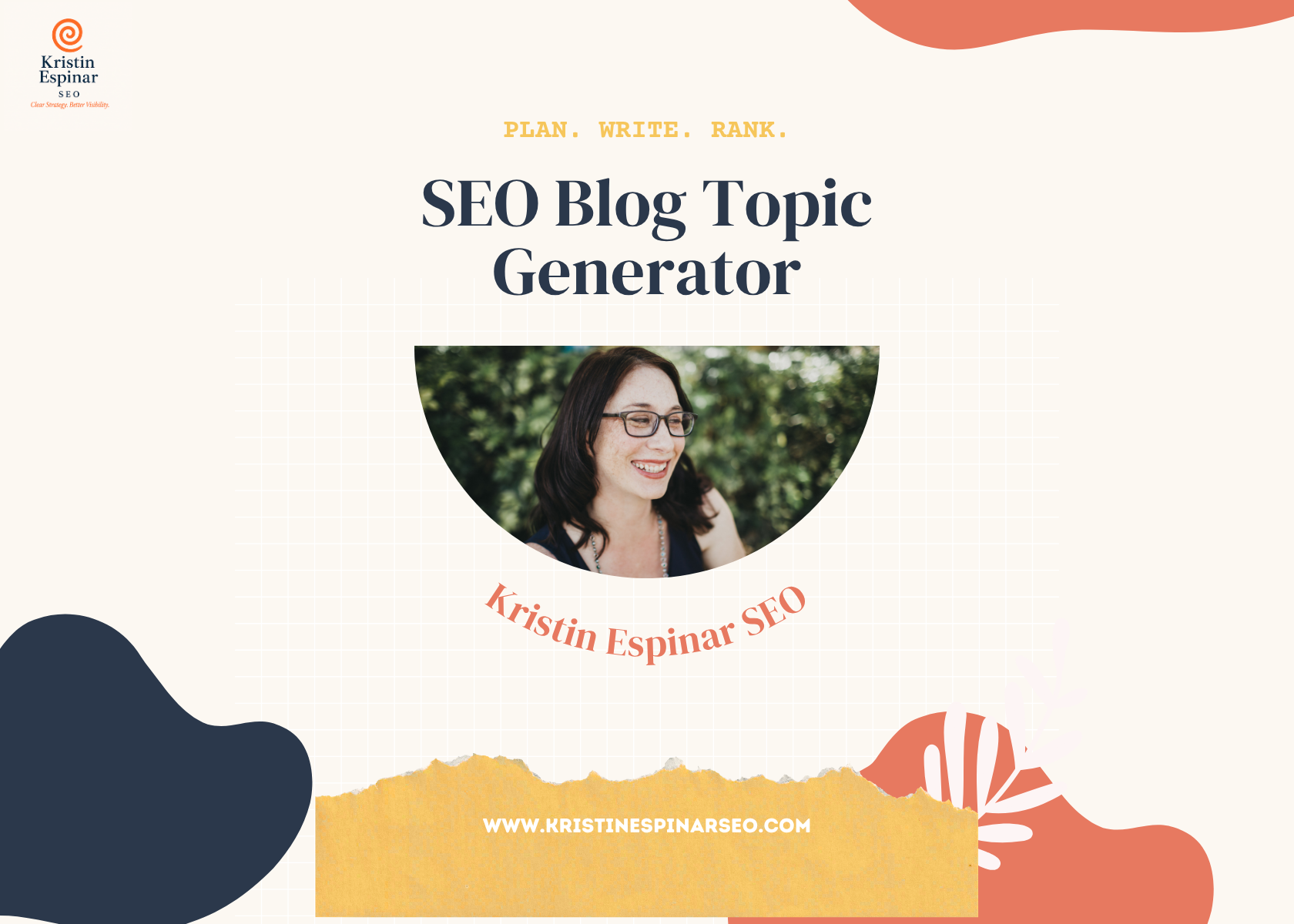
That’s exactly why I created the SEO Blog Topic Generator.
Instead of staring at a blank page, you’ll receive blog topic ideas based on SEO opportunities that help you create content your audience actually wants to read.
Whether you’re just getting started or trying to stay consistent with your content, it’s an easy way to take the guesswork out of blogging.
Download the free SEO Blog Topic Generator and start building a content strategy with confidence.
Quality Matters More Than Quantity
One of the biggest blogging myths is that you need to publish constantly.
That’s no longer true.
Google would much rather recommend one excellent article than five rushed posts with little value. A well-written blog that answers a question thoroughly is far more valuable than several short articles that don’t provide much insight.
Focus on creating content that’s:
- Helpful
- Accurate
- Well organized
- Easy to understand
- Relevant to your audience
When every blog post has a purpose and genuinely helps your readers, you’re building content that can continue driving traffic over time.
Common Blogging Mistakes
Many businesses start blogging with good intentions but never see results.
Usually, it’s because they’re making one of these common mistakes.
Writing Without a Strategy
Publishing random topics makes it difficult to build authority.
Instead, create content around your services, your expertise, and the questions your ideal customers are already asking. Over time, those related articles help establish your website as a trusted resource.
Targeting the Wrong Keywords
Choosing keywords based only on search volume often leads to frustration.
Instead, focus on keywords that match your services and your audience’s intent. Ranking for the right searches is much more valuable than ranking for the biggest ones.
Writing Only for Search Engines
Your audience comes first.
Write naturally, answer the question completely, and use keywords where they fit. If your content is genuinely helpful, Google’s algorithms are much more likely to recognize its value.
Giving Up Too Soon
One of the biggest reasons people think blogging doesn’t work is because they stop too early.
Like SEO itself, blogging is a long-term investment. Each article builds on the last, helping your website gain authority and creating more opportunities to be found in search results.
How Often Should You Publish Blog Posts?
One of the most common questions I hear is, “How often should I blog for SEO?”
The honest answer is: it depends on your business and your resources.
For many small businesses, publishing two to four high-quality blog posts each month is enough to build momentum. The key is consistency. It’s better to publish one thoughtful article every other week than to publish several posts in one month and then disappear for the next six.
As your library of content grows, so do your opportunities to rank for more keywords, answer more customer questions, and attract more qualified visitors.
Does AI-Written Content Help SEO?
AI has made blogging faster, but it hasn’t replaced the need for expertise and strategy.
Google has said it doesn’t reward or penalize content simply because AI was involved. Instead, it evaluates whether the content is helpful, accurate, and valuable to readers.
AI can be a great tool for brainstorming ideas, creating outlines, or overcoming writer’s block. However, your blog should still reflect your experience, insights, and knowledge of your customers.
The best-performing content often combines AI efficiency with human expertise. AI helps speed up the process, while you ensure the content is accurate, useful, and genuinely helpful.
How Do You Know If Your Blog Is Working?
Blogging isn’t just about getting more page views. Success comes from attracting the right visitors.
Some metrics to watch include:
- Organic traffic from search engines
- Keyword rankings
- Time spent on the page
- Contact form submissions
- Newsletter sign-ups
- Discovery calls or sales generated from your content
Remember, every blog post doesn’t have to go viral. Sometimes one article that consistently brings in qualified leads is far more valuable than a post with thousands of visitors who never become customers.
My Approach to SEO Blogging
When I write SEO blog content, I don’t start by asking, “What should I write?”
I start by asking:
- What makes your business different?
- Who are you trying to reach?
- What problems are your customers trying to solve?
Then we build a content strategy around those answers.
Every blog should have a purpose. It should answer a real question, target a relevant keyword, support your business goals, and naturally guide readers toward the next step. That’s how blogging becomes more than just content—it becomes part of your overall marketing strategy.
Does Blogging Help SEO? The Bottom Line
So, does blogging help SEO?
Absolutely—but only when it’s done with purpose.
Publishing helpful, well-organized content gives Google more opportunities to understand your website and connect you with people searching for your products or services. It helps you target more keywords, build topical authority, answer customer questions, and create long-term organic traffic.
Instead of thinking about blogging as another marketing task, think of it as an investment. Every quality article you publish becomes another opportunity for someone to discover your business.
The businesses that see the best results aren’t necessarily the ones publishing the most content. They’re the ones consistently creating content that answers the questions their audience is already asking.
Not Sure What to Write About Next?
Coming up with blog ideas is often the hardest part of blogging.
That’s exactly why I created the SEO Blog Topic Generator.
Instead of guessing what your audience wants to read, you’ll receive SEO-friendly blog topic ideas designed to help you attract more organic traffic and create content with purpose.
Whether you’re writing your first blog post or planning months of content, it’s a simple way to take the guesswork out of your strategy.
Download the free SEO Blog Topic Generator and start creating blog content your audience—and Google—will love.
Hi, I’m Kristin
I’m the person who gets excited about keyword research, content strategy, and helping businesses get found online. My goal is to make SEO feel less overwhelming by creating practical strategies and content that connects with the right audience.
Whether you’re writing your own blog posts or looking for a long-term SEO content strategy, I’d love to help you create content that supports your business goals and continues working long after you hit publish.
Frequently Asked Questions
Is blogging still good for SEO?
Yes. Blogging is still one of the most effective ways to improve SEO because it gives your website more opportunities to rank for relevant keywords, answer customer questions, and demonstrate expertise. Publishing helpful, high-quality content consistently can increase organic traffic, build topical authority, and support long-term search visibility.
What is the 80/20 rule in SEO?
The 80/20 rule in SEO suggests that a small percentage of your efforts often produces the majority of your results. Instead of trying to optimize everything at once, focus on the pages, keywords, and content most likely to drive qualified traffic and conversions. Prioritizing high-impact improvements often delivers the greatest return.
Is WordPress better than Blogger for SEO?
For most businesses, yes. WordPress offers greater control over SEO features like metadata, URL structure, internal linking, schema markup, site speed, and plugins such as Yoast SEO. While Blogger can rank in search results, WordPress provides the flexibility and optimization tools needed for a stronger long-term SEO strategy.
Is SEO dead or evolving in 2026?
SEO is evolving, not dying. Search engines now prioritize helpful, user-focused content that satisfies search intent rather than simply matching keywords. AI-powered search, Google AI Overviews, and changing user behavior are reshaping SEO, but businesses that create valuable content and maintain a strong website continue to benefit from organic search traffic.


view + leave comments . . .