You spend time growing your email list, creating helpful content, and developing offers your audience genuinely needs. Then it is time to send an email, and suddenly you have no idea what to say.
Should you share a tip? Tell a story? Promote a service? How long should the email be? How do you encourage readers to click without sounding overly promotional?
Learning how to write marketing emails is not about finding one perfect formula. It is about understanding your audience, sharing something valuable, and making every email feel like it came from a real person.
The most effective emails are relevant, useful, and easy to read. They give subscribers a reason to pay attention without making every message feel like a sales pitch.
Here is how to create emails your subscribers will actually want to open and read.

Understand Why People Read Certain Emails
Think about the emails you regularly open. You probably recognize the sender, understand what you will gain from reading, and trust that the message will be worth your time.
The emails you ignore likely feel irrelevant, overly promotional, confusing, or impersonal.
That is why understanding how to write marketing emails starts with your reader. Before writing, ask:
- Who will receive this email?
- What are they currently trying to accomplish?
- What question can I answer?
- What problem can I help them solve?
- Why does this topic matter to them?
- What should they do after reading?
You do not need to share a groundbreaking idea in every email. One helpful tip, useful reminder, interesting observation, or encouraging message can be enough.
Start With an Effective Subject Line
Your subject line has one job: give someone a reason to open the email.
It does not need to summarize everything inside. It should create enough interest for your subscriber to want to know more.
Effective subject lines are usually specific, clear, and connected to something your audience already cares about.
Compare these examples:
1: Generic: Our Latest Email Marketing Tips
1. Stronger: Why no one is clicking your emails
2. Generic: Read Our New Blog Post
2. Stronger: The email mistake costing you clicks
3. Generic: Learn About SEO
3. Stronger: Is your website answering the right questions?
When learning how to write marketing emails, avoid treating the subject line as an afterthought. Write several options before choosing one.
Try Different Subject-Line Approaches
You can create subject lines around:
- A question your audience frequently asks
- A common mistake
- A specific result
- A surprising observation
- A helpful list
- A personal story
- A timely reminder
- A clear benefit
Avoid exaggerated promises or misleading curiosity. Getting someone to open the email will not help if the content fails to deliver what the subject line promised.
Add Helpful Preview Text
Preview text is the short line displayed next to or below the subject line in many inboxes. Use it to add context instead of repeating the subject line.
For example:
Subject line: Why no one is clicking your emails
Preview text: The problem might not be your offer.
Together, these elements create a stronger reason to open the message.
Write Like You Are Talking to One Person
Your email might go to hundreds of subscribers, but each person reads it individually.
Writing to everyone at once often results in language that feels formal and distant. Writing to one specific person creates a more natural message.
One of the easiest ways to understand how to write marketing emails is to imagine writing to a customer you know. Think about how you would explain the idea during a conversation and use the words you would naturally say.
Instead of this:
Our company is pleased to announce the availability of a new digital resource designed to support business owners with their content marketing initiatives.
Try this:
Not sure what to write about next? I created something that can help.
The second version is shorter, clearer, and easier to understand.
Make Your Writing More Conversational
Conversational writing does not mean being unprofessional. It means removing language that creates unnecessary distance between you and your reader.
To make your emails sound more natural:
- Use contractions
- Choose familiar words
- Ask questions
- Vary your sentence length
- Write directly to the reader
- Include your natural expressions
- Read the email aloud before sending it
If a sentence feels awkward when you say it, it will probably feel awkward when someone reads it.
Give Your Readers Something Valuable
Every email should give your audience a reason to stay subscribed.
That value does not always need to be a discount, free download, or lengthy tutorial. It can be one useful tip, a new perspective, a helpful reminder, or a story that makes the reader feel understood.
Knowing how to write marketing emails means balancing what you want to say with what your reader needs to receive.
Before sending an email, ask:
What will my reader know, understand, feel, or be able to do after reading this?
If you cannot answer that question, the purpose of the email may need to be clearer.
Choose Useful Email Topics
Small business email marketing content could include:
- Answers to frequently asked questions
- Quick tips related to your services
- Common mistakes to avoid
- Behind-the-scenes insights
- Customer success stories
- Personal lessons connected to your business
- New blog posts or resources
- Industry updates explained simply
- Invitations to reply with a question
You can also promote your products and services. The key is helping readers understand why the offer matters instead of simply announcing that it exists.
Focus on One Main Message
Trying to include too much is one of the most common email marketing mistakes.
An email might introduce a blog post, promote three services, mention an upcoming event, share a personal update, and ask the reader to follow several social media accounts. By the end, the subscriber does not know what to do.
When deciding how to write marketing emails, complete this sentence before you begin:
After reading this email, I want my subscriber to ______.
Your answer could be:
- Read a blog post
- Download a free resource
- Reply to a question
- Book a consultation
- Purchase a product
- Register for an event
- Consider a new idea
Everything in the email should support that primary goal.
Make Every Email Easy to Read
Most subscribers will not carefully read every word. They will scan the email first and decide whether it deserves more attention.
Large blocks of text can make even a valuable email feel like work.
Use:
- Short paragraphs
- Helpful subheadings
- Bulleted lists
- White space
- Occasional bold text
- Clear links or buttons
Understanding how to write marketing emails also means understanding how people read on their phones. Preview each email on mobile and check whether it is easy to follow.
Keep the Design Simple
You do not need an elaborate design to look professional.
A simple email with a recognizable logo, readable font, consistent colors, and clear button can be more effective than a heavily designed newsletter.
Your writing should remain the focus. Design should guide readers through the message without distracting them from it.
Include One Clear Call to Action
A call to action tells the reader what to do next.
Do not assume subscribers will automatically understand what you want. Make the next step specific and easy to complete.
Examples include:
- Read the complete guide
- Download the workbook
- Book your SEO Check-Up
- Explore the template
- Reply and tell me
- Save your seat
- View the service
Your call to action should match the email’s purpose. If the message teaches readers how to create better blog content, linking to a related template makes sense. An unrelated offer will feel forced.
You can mention the call to action more than once in a longer email, but the primary action should remain consistent.
Develop a Recognizable Email Voice
Someone should be able to read your email and recognize that it came from you.
Your email brand voice includes the words you choose, the way you explain ideas, the formality of your writing, and the feeling you create.
When learning how to write marketing emails, it is easy to focus entirely on subject lines, formatting, and calls to action. Those elements matter, but they are not necessarily what makes your emails memorable.
Your voice is what helps your emails feel different from every other message in your subscriber’s inbox.
Choose Your Voice Characteristics
Start by choosing three to five words that describe how you want your business to sound.
For example:
- Strategic
- Encouraging
- Thoughtful
- Practical
- Conversational
Then decide what those qualities mean in practice.
If your voice is practical, you might include clear examples and next steps. On the other hand, if it is encouraging, you might acknowledge challenges without using fear or shame. If it is conversational, you might use contractions, questions, and straightforward language.
Use AI Without Losing Your Voice
AI can help you brainstorm subject lines, organize an email, or improve a draft. However, copying an AI-generated email without editing it can result in writing that sounds generic.
Give AI information about your audience, voice, preferred language, and writing style. Then revise the draft to reflect how you naturally communicate.
Remove phrases you would never say. Add your own observations, examples, and opinions. The finished email should still sound like it came from you.
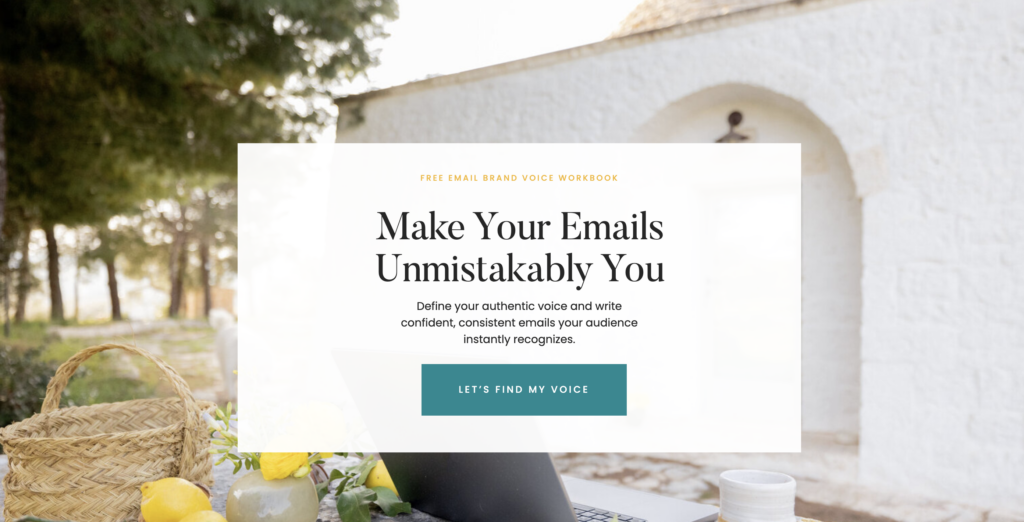
Define Your Voice With the Free Email Brand Voice Workbook
Your emails need more than the right structure. They should also sound like you.
The free Email Brand Voice Workbook will help you define how you want your business to sound so you can write emails that feel natural, recognizable, and consistent.
Inside the Workbook, You’ll:
- Choose the words that best describe your brand
- Decide how you want readers to feel
- Define your brand’s personality and tone
- Identify words and phrases that sound like you
- Remove language that feels generic, pushy, or off-brand
- Practice rewriting marketing language in your own voice
- Create a repeatable formula for writing every email
- Build your complete Email Brand Voice Guide
- Write a final brand voice statement for future reference
- Use a quick checklist before sending each email
You’ll finish with a personalized voice guide, email formula, writing example, and cheat sheet you can use whenever you write.
If you understand how to write marketing emails but still struggle to make them sound like you, this workbook will help you connect the strategy with your unique voice.
Download the Free Email Brand Voice Workbook →
Stay Consistent Without Becoming Repetitive
Consistency helps subscribers recognize and trust your business. It does not mean every email needs to follow the same formula.
One email might share a personal story. Another could provide a quick tip. The next might promote a service or introduce a new blog post.
What remains consistent is the experience you create. Your subscribers should understand the kind of value they can expect and how your emails will make them feel.
Choose a schedule you can realistically maintain, whether that is weekly, every other week, or monthly. It is better to send one helpful email consistently than disappear for months and return only when you have something to sell.
Review Your Email Before Sending
Before clicking send, check:
- Does the subject line create an honest reason to open?
- Is the main purpose clear?
- Does the opening encourage readers to continue?
- Is the email focused on one message?
- Does it provide something useful?
- Does the writing sound natural?
- Is it easy to scan?
- Is the call to action clear?
- Do all the links work?
- Does it look good on mobile?
Send yourself a test email whenever possible. Seeing the message in your inbox can reveal spacing, formatting, and wording issues that are difficult to notice in the email editor.
Write for Connection, Not Perfection
You do not need to be a professional copywriter to send effective emails.
Start with one reader, one useful message, and one clear next step. Write in language that feels natural, make the email easy to read, and give subscribers a reason to continue opening your messages.
The best way to improve is to keep writing, sending, and paying attention to what resonates with your audience.
That is the real secret behind how to write marketing emails people actually want to read.
Frequently Asked Questions About Marketing Emails
What Is a Good Marketing Email?
A good marketing email is clear, relevant, and focused on one primary message. It offers something valuable, sounds natural, and includes a specific call to action. Effective marketing emails also use compelling subject lines, readable formatting, and language that reflects the business’s brand voice.
How Do You Write a Marketing Email?
To write a marketing email, identify your audience, choose one goal, and create a subject line that encourages readers to open it. Begin with an engaging introduction, deliver useful information, and finish with a clear call to action. Keep the writing conversational, concise, and easy to scan.
What Are Marketing Emails?
Marketing emails are messages businesses send to subscribers to build relationships, share information, promote products, and encourage specific actions. They may include newsletters, educational content, product announcements, special offers, event invitations, welcome messages, and reminders. Subscribers typically receive them after joining a business’s email list.
What Are 10 Popular Marketing Emails?
Ten popular types of marketing emails are:
- Welcome emails
- Email newsletters
- Promotional emails
- Product launch emails
- Educational emails
- Lead-nurturing emails
- Abandoned-cart emails
- Event invitation emails
- Customer re-engagement emails
- Post-purchase follow-up emails


view + leave comments . . .