Writing a high-quality blog post takes time.
You research keywords, organize your ideas, write the content, optimize it for SEO, and hit publish. Then you move on to the next project, hoping people find it through search engines.
But what if one blog post could become weeks of marketing content?
That’s exactly why it’s important to repurpose blog content.
Repurposing doesn’t mean copying and pasting the same information everywhere. It means adapting your existing content into different formats so you can reach more people, reinforce your message, and get more value from the work you’ve already done.
If you’re wondering how to repurpose blog content without sounding repetitive, you’re in the right place. In this guide, you’ll learn why content repurposing matters, the best ways to reuse your blog posts, and how to turn one article into an entire content marketing strategy.

What Does It Mean to Repurpose Blog Content?
To repurpose blog content means taking an existing blog post and transforming it into new pieces of content for different platforms and audiences.
Instead of writing everything from scratch, you’re building on ideas you’ve already researched and created.
For example, one blog post can become:
- An email newsletter
- Several social media posts
- A LinkedIn article
- Short-form videos
- An infographic
- A downloadable checklist
- Frequently asked questions
- A podcast episode
You’re not creating duplicate content. You’re presenting the same ideas in ways that fit different channels and how people consume information.
Why Repurposing Content Matters
Creating content requires a significant investment of time.
Repurposing helps you maximize that investment.
Rather than letting a blog post sit unnoticed after it’s published, you can continue using it to educate your audience, drive traffic, and build relationships.
Repurposing your content can help you:
- Reach people on different platforms
- Increase traffic to your website
- Reinforce your expertise
- Stay consistent with your marketing
- Save time creating new content
- Extend the life of every blog post
One thoughtful article can support your marketing efforts for weeks or even months.
Repurposing Supports SEO
Many people think repurposing is only about social media.
It also supports your SEO strategy.
When you share your blog through email, social media, and other channels, you’re creating more opportunities for people to discover your content.
That increased visibility can lead to:
- More website visits
- More backlinks
- More brand awareness
- Longer engagement
- More returning visitors
While Google doesn’t rank pages simply because they’re shared on social media, getting your content in front of more people increases the chances that it will be discovered, referenced, and linked to over time.
Start with One Great Blog Post
Before you repurpose blog content, make sure your original article is worth repurposing.
The strongest content usually:
- Answers a common customer question
- Solves a specific problem
- Targets one primary keyword
- Includes practical advice
- Remains relevant over time
Evergreen articles often make the best candidates because they continue attracting readers long after they’re published.
For example, articles like:
- What Is Search Intent?
- How Long Does SEO Take?
- Does Blogging Help SEO?
- How Does Google Rank Websites?
can all be repurposed repeatedly throughout the year.
Turn Your Blog into an Email
One of the easiest and most effective ways to repurpose blog content is by turning it into an email.
Many business owners spend hours writing a blog post, then struggle to come up with something new to send their email list.
The good news is you don’t have to.
Your subscribers don’t need your entire blog copied into an email.
Instead, think of your email as an introduction.
Highlight the key takeaway, tell a short story, ask an interesting question, or share one actionable tip before inviting readers to continue reading the full article on your website.
This approach saves time while driving traffic back to your blog.
Stop Starting from Scratch
If you’ve ever stared at a blank email wondering what to write, you’re not alone.
One of the biggest content marketing mistakes is treating your blog and your email marketing as two completely separate projects.
In reality, they should work together.
That’s exactly why I created the Blog-to-Email Template.
Instead of wondering how to summarize your blog, what to include, or how to encourage clicks without giving away the entire article, you’ll have a simple framework you can use every time you publish new content.
Inside the template, you’ll learn how to transform one blog post into an engaging email that sounds natural, builds curiosity, and encourages readers to visit your website.
It’s a practical way to save time, stay consistent, and get more value from every blog you write.
Create Social Media Posts
Your blog is also an excellent source of social media content.
Rather than promoting the same link over and over, pull different ideas from your article.
For example, one blog post can become:
- A quick tip on LinkedIn
- A carousel on Instagram
- A Facebook discussion
- Several X (Twitter) posts
- A Pinterest graphic
Each post can highlight a different takeaway while encouraging readers to visit your website for the complete article.
Turn Statistics into Graphics
If your article includes research, data, or step-by-step advice, consider turning those ideas into visual content.
Simple graphics often perform well because they’re easy to save and share.
Examples include:
- Checklists
- Flowcharts
- Quote graphics
- Comparison charts
- Process diagrams
Visual content reinforces your message while attracting audiences who prefer learning through images rather than long-form articles.
Answer Frequently Asked Questions
Every blog post naturally answers several questions.
Those questions can become:
- FAQ pages
- Google Business Profile posts
- Social media content
- Short videos
- Email topics
Repurposing your FAQs helps you continue addressing customer questions across multiple marketing channels.
Don’t Just Share the Link
One mistake I see often is publishing a blog and then repeatedly posting the same link on social media.
Instead, pull different insights from your article each time you share it.
One week you might highlight a statistic.
The next week you might ask a question.
Later you could share a short tip or client story.
You’re still promoting the same blog, but each post feels fresh and gives people a new reason to click.
Turn Your Blog into Video Content
Not everyone enjoys reading long blog posts.
Some people would rather watch a quick video while others prefer listening to a podcast on their commute. That’s another reason it’s smart to repurpose blog content into multiple formats.
A single blog post can easily become:
- A one-minute Instagram Reel
- A LinkedIn video
- A YouTube tutorial
- A webinar
- A short educational video for your website
You don’t need to read the article word for word. Instead, pull out one or two key ideas and explain them in your own words. Then invite viewers to read the full blog for additional tips and examples.
Refresh and Republish Older Blog Posts
Repurposing isn’t always about creating something new.
Sometimes the best strategy is improving content you’ve already published.
Review your older blog posts every six to twelve months and look for opportunities to:
- Update outdated information
- Add new examples
- Improve headings
- Include additional FAQs
- Add internal links
- Refresh images or screenshots
A few small updates can keep your content relevant and improve its long-term SEO performance.
Measure What’s Working
Once you start to repurpose blog content, pay attention to which formats resonate most with your audience.
Some blogs might generate the most traffic through search engines, while others perform better when shared through email or social media.
A few metrics to monitor include:
- Website traffic
- Email click-through rates
- Social media engagement
- Time on page
- Conversions
- Downloads or inquiries
These insights help you decide where to invest your time and which content deserves to be repurposed again.
Common Content Repurposing Mistakes
Repurposing content can save a tremendous amount of time, but it’s important to do it thoughtfully.
Copying and Pasting Everything
Repurposing isn’t about posting the exact same content everywhere.
Each platform has a different audience and format. Adapt your message so it feels natural whether someone is reading an email, scrolling through LinkedIn, or watching a short video.
Forgetting Your Goal
Every piece of content should have a purpose.
Ask yourself:
- What do I want someone to do next?
- Does this piece of content answer a question?
- Am I providing value?
Having a clear objective makes your content much more effective.
Trying to Repurpose Every Blog
Not every article needs to become ten different pieces of content.
Start with your strongest evergreen posts that answer common customer questions or support your core services.
These articles will continue providing value long after they’re published, making them ideal candidates for repurposing.
Not Including a Call to Action
Every repurposed piece of content should guide your audience toward the next step.
That might be:
- Reading the full blog
- Downloading a free resource
- Booking a consultation
- Joining your email list
- Purchasing a product
Without a clear call to action, you may be missing opportunities to turn readers into customers.
Repurpose Blog Content to Save Time and Grow Your Business
If there’s one takeaway from this article, it’s this:
You don’t have to create new content every time you market your business.
When you repurpose blog content, you’re extending the life of work you’ve already invested in. One thoughtful blog post can become emails, social posts, videos, FAQs, downloadable resources, and much more.
Instead of constantly asking, “What should I create next?” start asking, “How can I get more value from what I’ve already created?”
That shift alone can make your marketing feel more manageable while helping you stay consistent across every channel.
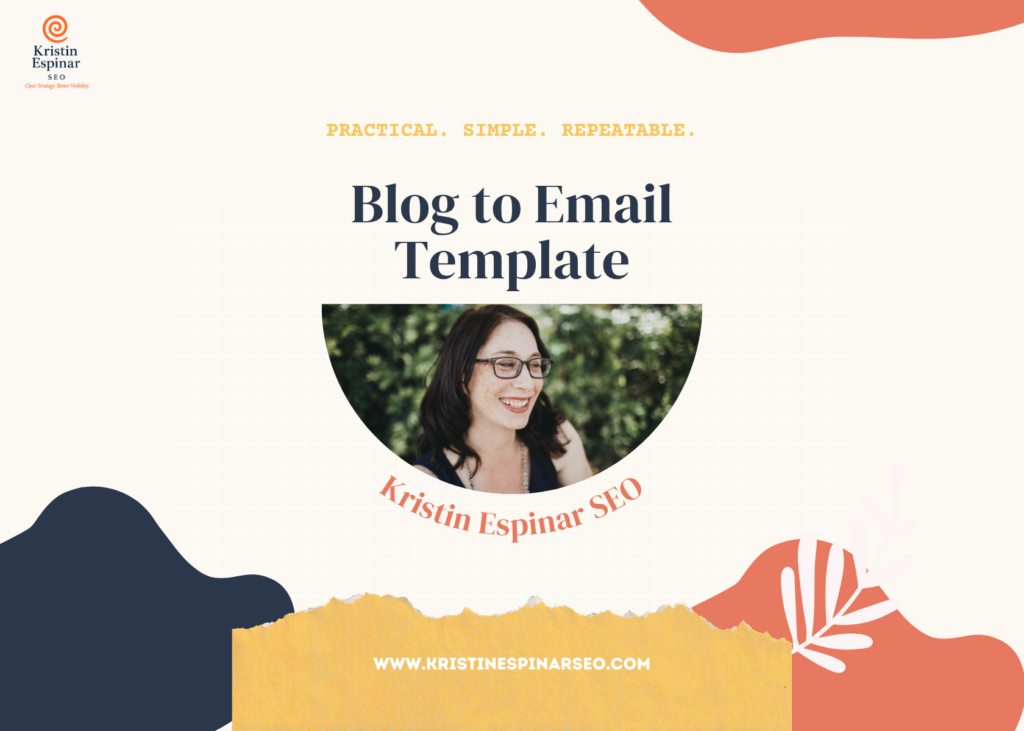
Turn Every Blog into an Email
One of the easiest ways to get more mileage from your content is by sending it to your email list.
But writing an email that complements your blog without simply repeating it can be challenging.
That’s exactly why I created the Blog-to-Email Template.
Inside, you’ll learn a simple, repeatable process for transforming blog posts into engaging marketing emails that encourage clicks, build relationships, and keep your audience coming back for more.
You’ll receive:
- A step-by-step framework
- Fill-in-the-blank templates
- Writing prompts
- Real examples
- Tips for encouraging readers to click through to your website
Instead of wondering what to send every time you publish a blog, you’ll have a proven system that helps your blog and email marketing work together.
Explore the Blog-to-Email Template and start getting more value from every blog post you write.
Hi, I’m Kristin
I love helping businesses create content that works harder for them. Whether it’s developing an SEO strategy, planning blog topics, or turning one piece of content into an entire marketing campaign, my goal is to make content marketing feel practical, organized, and sustainable.
Great marketing isn’t about creating more content. It’s about creating the right content and using it in smart, strategic ways.
Frequently Asked Questions
What does it mean to repurpose blog content?
Repurposing blog content means transforming an existing blog post into new formats, such as email newsletters, social media posts, videos, infographics, podcasts, or downloadable resources. This helps you reach more people while getting more value from the content you’ve already created.
Why should I repurpose blog content?
Repurposing content saves time, extends the life of your blog posts, improves content consistency, and helps you reach audiences across multiple platforms. It also supports your overall content marketing strategy by reinforcing your expertise and driving more traffic to your website.
Can repurposing blog content help SEO?
Yes. While repurposing itself doesn’t directly improve rankings, sharing your blog through email, social media, and other channels can increase visibility, attract more visitors, encourage backlinks, and support your overall SEO efforts.
What’s the easiest way to repurpose a blog post?
One of the simplest ways to repurpose a blog post is by turning it into an email newsletter. Summarize the main takeaway, share one helpful tip, and invite readers to click through to your website for the full article.


view + leave comments . . .